


Armed or Unarmed in EP
rloatman2025-09-04T16:25:54+00:00Armed vs. Unarmed in Executive Protection: Are You Protecting the Principal - or Preparing for a Gunfight? In the world of Executive Protection, few topics are as polarizing - or as misunderstood - as the decision to carry a firearm. For some, it’s non-negotiable: protection equals firepower. For others, especially those operating in corporate and domestic settings, being unarmed is a deliberate choice that prioritizes discretion, de-escalation, and risk mitigation. The truth? There is no one-size-fits-all answer. But there is a non-negotiable principle: the EP specialist's primary obligation is to cover and evacuate the principal. Not to return fire. Not to engage. Not to “take out the bad guy.” The Mission: Cover and Evacuate At the heart of executive protection lies a simple but uncompromising directive: preserve the life and safety of the principal. In a threat scenario, the EP specialist’s job is not to eliminate the attacker, detain a suspect, or return fire. The mission is survivability. That means: Getting the principal out of the danger zone as quickly and decisively as possible Using your own body as a shield if necessary Executing a practiced, pre-planned evacuation strategy - not improvising with a weapon drawn under stress This principle is not a suggestion. It is doctrine. Time Budgets in Close-In Protection: Movement Over Firepower In close protection, time is always working against you. Most attacks on principals occur at short distances and unfold in less than two seconds. That’s your total budget - for recognition, reaction, and protective movement. In that moment, you don’t have time to: Assess the weapon Confirm intent Draw, aim, and engage You have time to do one thing well: move. And that’s exactly where trained executive protection specialists shine. Within that narrow time window, a professional can: Break the line of [...]

Trust, but Verify – Contracting EP Services
rloatman2025-08-12T11:42:40+00:00Trust, But Verify - Managing Vendor Risk In the world of Executive Protection (EP), the need for short-term, outsourced support is a reality of the job. Whether you’re managing a high-profile event, covering a C-suite visit to a secondary location, or providing transport coverage while the primary team is off rotation, contracting a local or third-party resource can be the most efficient path forward. But outsourcing close-in protection and secure transportation services introduces real operational and reputational risks - especially when assignments are fast-moving or lightly scoped. If we fail to set expectations from the start, we open the door to everything from minor confusion to major liability. The Reality: Vendors Can Be Assets - or Liabilities Many seasoned professionals have been there: A local contractor arrives wearing the wrong attire and asking the wrong questions. A transport provider isn’t briefed on protocols or routing - and improvises. A well-meaning security agent posts a photo from the assignment to social media, unaware of the optics or breach it creates. These lapses, even when unintentional, undermine the trust placed in the EP detail and expose the principal, the client brand, and the protective team to unnecessary risk. And in almost every case, the root cause is the same: a lack of clarity at the start. The Fix: A Simple Contract "Rider" To help address this, we’ve developed a free, field-ready EP Vendor & Contractor Rider Agreement. It’s designed for those short-term or rapid-response scenarios where traditional contracting may not keep up with operational tempo, but where standards still matter. This short-form document includes: Licensing and insurance requirements Professional conduct and dress expectations Confidentiality and media restrictions Coordination and chain-of-command guidance Use of force alignment Termination and post-engagement obligations It’s not a substitute for legal counsel, and we encourage [...]

The Advance Still Matters: Why Digital Recon Will Never Replace On-the-Ground EP Work
rloatman2025-07-31T15:29:23+00:00In the fast-moving world of executive protection, it’s easy to assume that powerful digital tools - Google Street View, GPS routing apps, or AI-powered scheduling assistants - can substitute for the traditional advance. They can’t. The advance, the time-honored practice of surveying a location before a principal arrives, is as essential today as ever. In fact, in a world filled with noise, unpredictability, and information gaps, it may be more important. Tech Tools Are Helpful - But Limited Make no mistake: digital platforms provide value. Mapping software can highlight entrances, traffic bottlenecks, and even security cameras captured during prior drive-bys. But they show the world as it was, not as it is. Construction zones shift. Protest zones emerge. Hotel security policies change. Drivers get reassigned. Your route may have looked perfect online yesterday - but be compromised today. No satellite photo will reveal if the valet booth has been moved or if a VIP entrance is now blocked due to a special event. Only the advance team’s eyes and ears can capture real-time, context-specific insight. Real EP Intelligence Happens in Person Executive protection is about shaping events - not just reacting to them. That requires more than knowing the map. It demands: Verifying hotel access control and surveillance practices Confirming medical facilities and emergency response proximity Reviewing FBO (private airport) protocols Testing the reliability and discretion of local drivers Evaluating alternate evacuation routes Reading human cues and understanding “atmospherics” This information cannot be found on a screen. It’s learned by being there. EP Success Comes From Preparation, Not Luck As we share in our book, the heart of executive protection is “zero defects” performance. The advance enables that precision. It’s how you eliminate surprises before they happen. A well-executed advance fosters quiet confidence. When the principal steps [...]

Mission Complete: Executive Protection Detail for Brad Thor’s Edge of Honor Book Tour
rloatman2025-07-12T12:03:40+00:00Mission Complete: Executive Protection Detail for Brad Thor's Edge of Honor Book Tour We are proud to announce the successful completion of a multi-city Executive Protection detail for bestselling author Brad Thor, in support of his latest release, Edge of Honor - the 24th thriller in the acclaimed Scot Harvath series. Tour Stops:Scottsdale, AZ → Dallas, TX → Atlanta, GA → Washington, D.C. This assignment included advance work and on-the-ground support for multiple high-profile public appearances. Our team managed secure arrivals and departures, conducted detailed site assessments, and ensured discreet, professional close-in protection throughout the tour. We thank Brad Thor for his continued trust and partnership. Brad has been a valued client and friend for many years, and we are honored to once again support him as he shares his work with fans around the country. #ExecutiveProtection #CloseProtection #ProtectiveServices
Is Your Executive Protection Team a Program – or Just a Presence?
rloatman2025-06-10T18:49:29+00:00At first glance, it may look like your executive protection is in place. There’s a driver. A familiar face at the event. Someone to manage movement when schedules get tight. But is it really a program - or just a presence? This is the question we ask organizations every week. Because in our experience, protection that “looks fine” on paper can fall apart when tested in the real world. What’s often missing is structure: strategy, accountability, operational discipline, and a clear understanding of risk. Without those, what you have isn’t protection - it’s improvisation. So what separates a well-structured executive protection (EP) program from a loosely coordinated effort? Here’s what we look for. Know the Risks Before You Protect Against Them Effective EP starts with risk clarity. Not in general terms, but specific to the individual: their role, visibility, recent threats, family considerations, travel patterns, and exposure due to corporate events or litigation. Too many organizations build protection around assumptions - or worse, visibility - instead of verified threats. A strong program begins with a formal threat and risk assessment, and that assessment should guide everything else: staffing, posture, logistics, and budget. One Program, Multiple Environments Real protection doesn’t stop at the office entrance. It spans every space the executive operates in - home, work, travel, events, even digital platforms. One of the most common gaps we encounter is inconsistency across domains. A company may invest heavily in office security while overlooking residential risks, or fail to vet travel itineraries where exposure is actually highest. If your protective posture doesn’t follow the executive, it doesn’t protect them. Planning Is Non-Negotiable Advance work is what distinguishes a professional EP operation from a reactive one. For every movement - whether it's a high-profile event or a routine commute - [...]
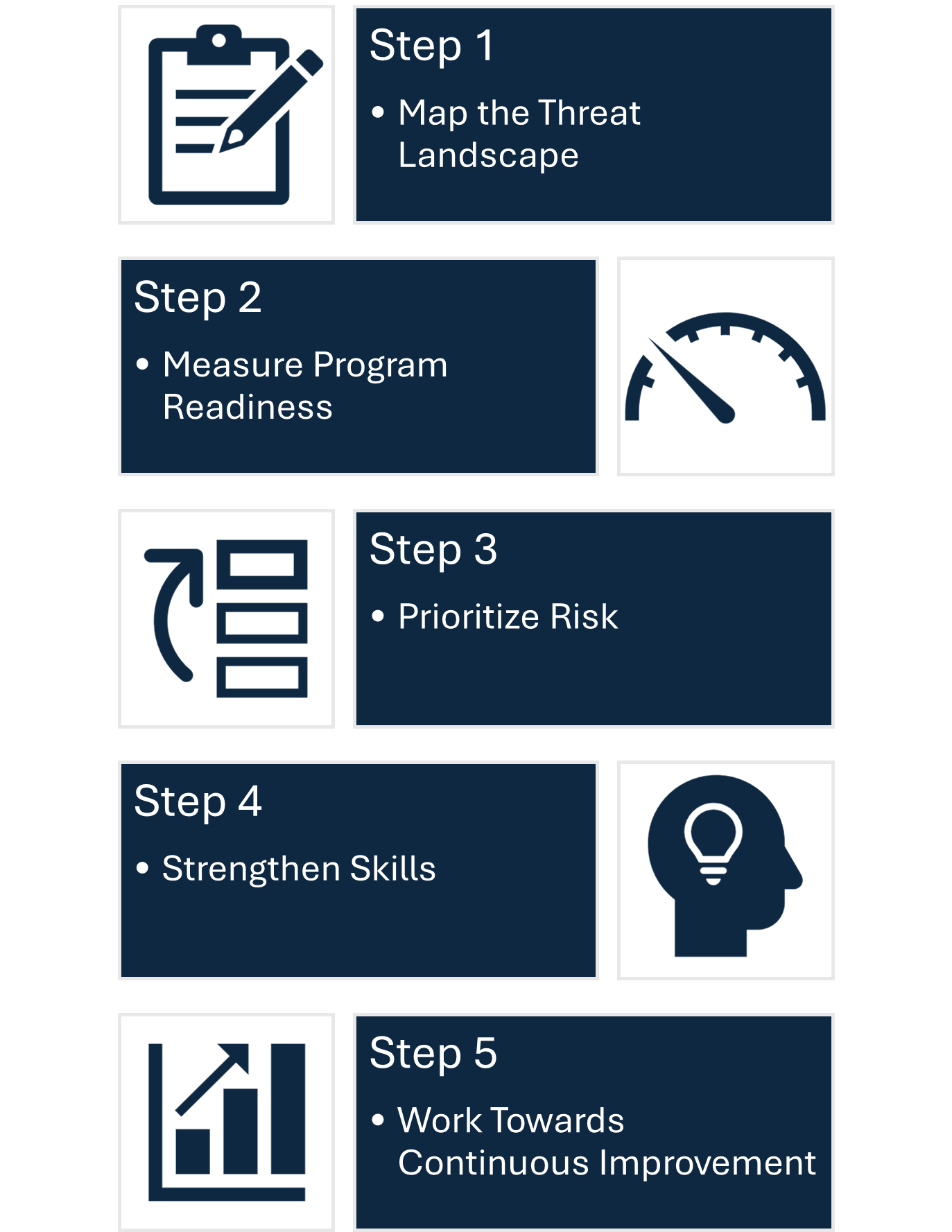
From Crisis to Confidence: Strengthening Executive Protection Programs After the UnitedHealthcare Attack
rloatman2025-05-28T14:33:49+00:00From Crisis to Confidence: Strengthening Executive Protection Programs After the UnitedHealthcare Attack The recent attack on UnitedHealthcare’s CEO has raised urgent questions about how we protect corporate leaders. I’ve shared a practical framework for strengthening executive protection programs—grounded in experience, not hype. 📄 From Crisis to Confidence: Strengthening Executive Protection Programs After the UnitedHealthcare Attack
5 Hidden Vulnerabilities in Executive Travel Security – And How to Fix Them
rloatman2025-05-27T12:39:19+00:00When executives travel, whether for board meetings, investor conferences, site visits, or international deals, the risks they face multiply dramatically. It’s not just about where they’re going or what they’re doing; it’s about the structure (or lack thereof) behind their movement. Even companies with solid executive protection protocols often overlook subtle but critical gaps in travel security. Based on decades of experience safeguarding high-profile leaders in complex environments, here are five of the most common vulnerabilities we see - and what you can do about them. 1. Unstructured or Ad Hoc Itineraries The Risk:Many executive trips are coordinated last-minute or pieced together from multiple sources, travel departments, executive assistants, and external partners. This fragmented approach makes it easy to lose sight of the full itinerary, which complicates planning and increases exposure. The Fix:Establish a centralized itinerary control process. Whether you use a secure digital platform or assign an EP team leader, every trip should have a single source of truth that integrates travel, lodging, meetings, and social events. If your EP team doesn’t see it, they can’t protect it. 2. Overreliance on Local Ground Transport The Risk:Executives often rely on ride-sharing services, hotel shuttles, or third-party providers for ground transportation, especially internationally. These drivers may not be vetted, trained in security protocols, or even aware of who they’re transporting. The Fix:Use vetted transportation providers with trained security drivers who understand movement protocol, contingency planning, and executive-level professionalism. In high-risk locations, pair the driver with an advance team or EP agent. 3. Unsecured Accommodations The Risk:Hotel reservations are frequently made based on brand, loyalty points, or proximity to meetings, with little thought to physical security, surveillance, or escape routes. In some cases, executives are booked into known high-risk areas or rooms with poor access control. The Fix:Conduct a [...]
Bob Oatman Shares His Thoughts on the Trump Assassination Attempt with the Baltimore Sun
rloatman2024-07-18T00:10:54+00:00Bob Oatman Shares His Thoughts on the Trump Assassination Attempt with the Baltimore Sun https://www.baltimoresun.com/2024/07/16/trump-shooting-executive-protection-security-pro/?share=reithmiesrceiumpiwet






Follow Us on LinkedIn